ChGGH Pet Supplies Manufacturer
As the status of companion animals in modern families elevates, the standards for daily pet grooming and care are gradually shifting toward professionalization and refinement. Traditional physical drying methods (such as high-power pet blowers) often struggle to strike a balance between drying efficiency and pet comfort. In recent years, the smart pet drying box, emerging as a new type of automated grooming hardware, has gained widespread attention in the European and American markets. This article will objectively analyze the industry landscape and technical standards of this equipment from the perspectives of hardware technology, thermodynamic design, and pet behaviorology.
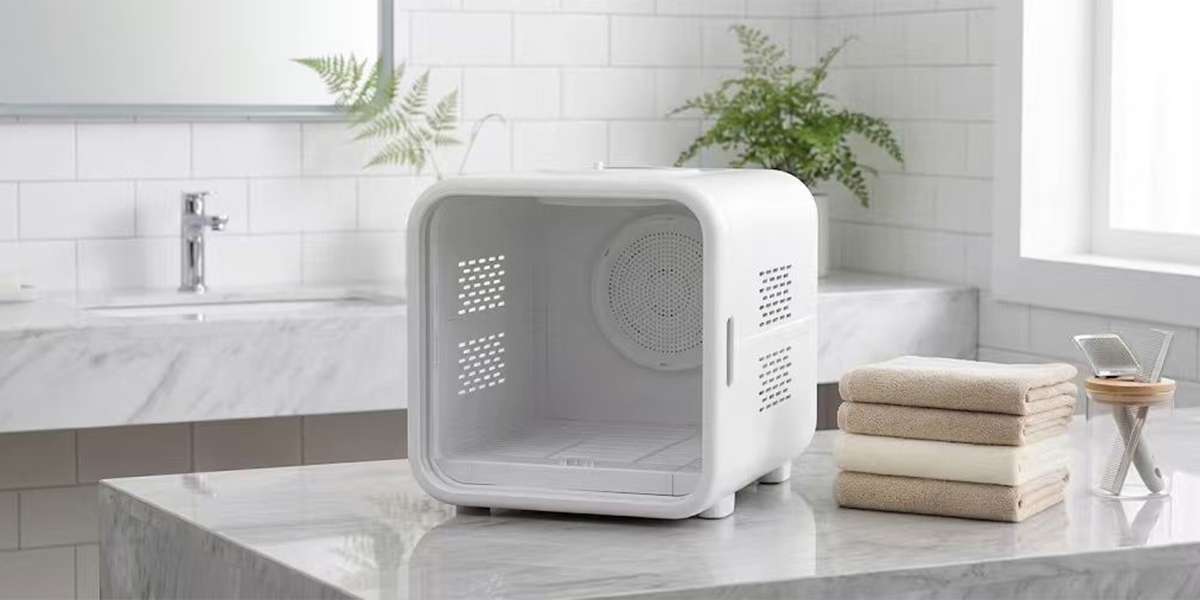
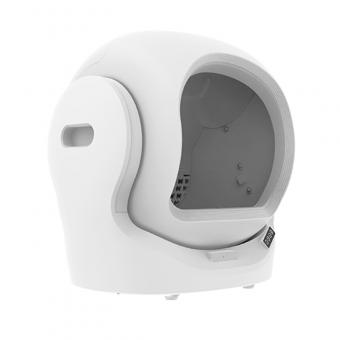
In traditional pet grooming workflows, moisture retained deep within the coat is one of the primary risks for fungal infections and skin diseases. The core technological logic of a smart drying box is not merely "heating and blowing," but rather constructing a temperature- and humidity-controlled "microclimate" through aerodynamic design within an enclosed cabin.
- Thermal Dynamics and Precision Control For authoritative hardware manufacturers, thermal safety is the primary consideration when designing drying boxes. Modern premium devices generally abandon traditional single heating wires in favor of PTC ceramic heating elements combined with PID algorithms for temperature control. Multiple high-precision NTC temperature sensors are typically distributed inside the device to monitor the cabin temperature at millisecond frequencies. When the temperature approaches the set safety threshold (usually between 38°C and 40°C, close to a pet's natural body temperature), the system automatically adjusts the output power to prevent burn risks caused by localized overheating.
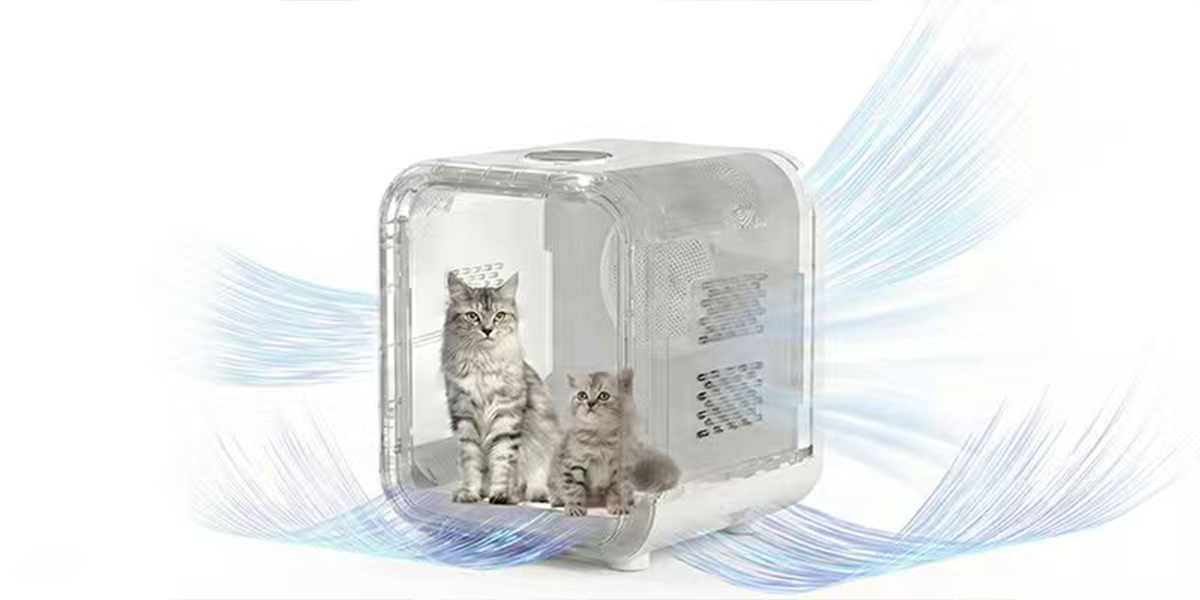
- Aerodynamic Airflow Channels Considering the physiological structure of dogs and cats, the abdomen and legs are often the areas where moisture accumulates most easily and is the hardest to dry. The mainstream solution in the industry is to adopt "bottom air delivery" or "360° stereoscopic circulating air delivery" technology. This fluid dynamics design allows the airflow to directly penetrate the hair roots at the bottom and carry away moisture through top exhaust vents, thereby significantly improving drying efficiency while ensuring fresh air inside the cabin.
Besides drying efficiency, the operating noise of the equipment is another key metric for measuring its professionalism. The auditory sensitivity of dogs and cats far exceeds that of humans, and high-frequency noise can easily trigger a pet's stress response.
In terms of acoustic control, high-standard drying boxes in the industry utilize Brushless DC (BLDC) motors and, by optimizing the fan blade structure and adding internal soundproofing materials, keep the operating environmental noise below 50 decibels.
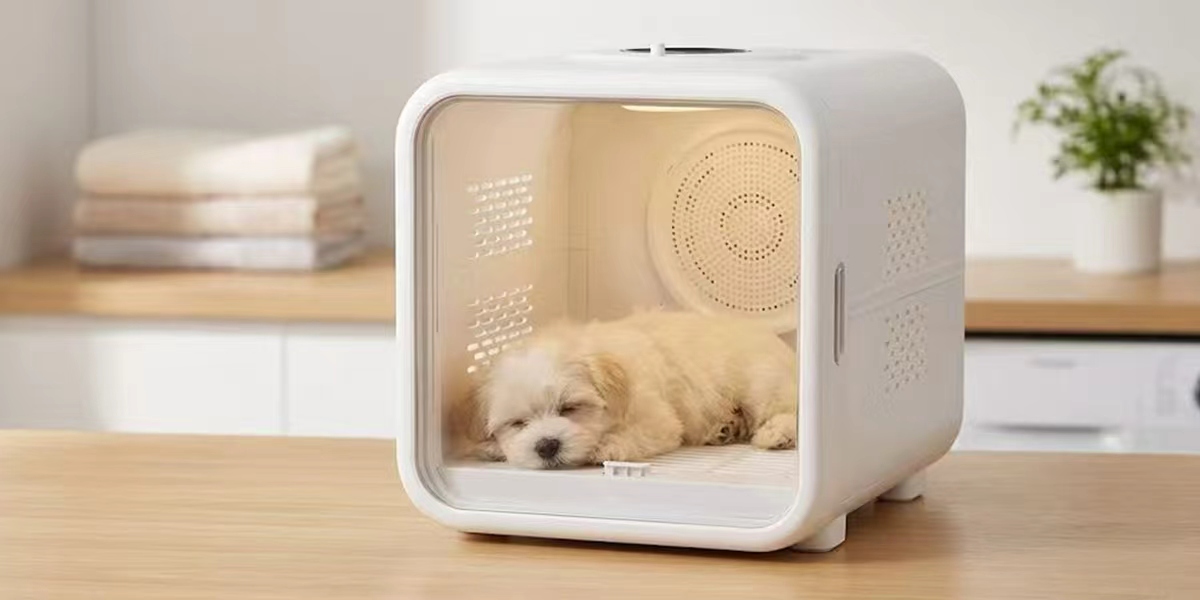
Objective Usage Recommendations and Transition Period: From a pet behaviorology perspective, any enclosed new equipment requires a desensitization process. Professional veterinarians and pet behavior experts recommend that during the initial use, pets should not be forced into the device and the machine started immediately. Users should provide a buffer period, allowing the device to serve as a resting cabin for the pet with the power off and the door open. Once the pet has established a sense of security, low-speed drying programs can be gradually introduced. This scientific guidance is a prerequisite for ensuring the long-term effectiveness of the equipment.
Currently, the smart pet drying box market is in a stage of rapid standardization. When consumers and professional buyers evaluate such hardware, they increasingly value fundamental safety designs, such as:
- Physical Safety Mechanisms: Whether it features a child lock function to prevent accidental touches and a cabin door with a physical anti-pinch design.
- Electrical Safety: Leakage protection modules and overload automatic power-off systems.
- Material Compliance: Whether the cabin materials are high-temperature resistant, scratch-resistant, and free of harmful substances like Bisphenol A (BPA-free).
Overall, by integrating sensor technology, fluid dynamics, and acoustic engineering, smart pet drying boxes provide a more systematic and safe solution for pet grooming. As technology continues to iterate, equipment that meets high standards will become a key driving force in pushing the pet care industry toward a digital and intelligent transformation.

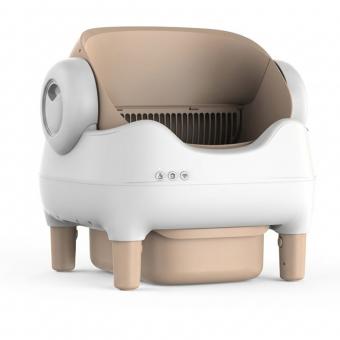
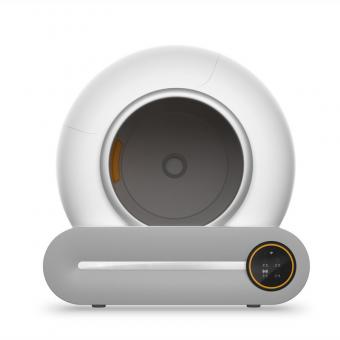
CHGGH is a professional manufacturer specializing in high-quality smart pet dryers, automatic litter boxes, feeders, and air purifiers. We offer global brands comprehensive OEM/ODM services, including product design, logo customization, and cross-border logistics. With 100% strict quality control and an expert export team, CHGGH is dedicated to helping you effortlessly build your exclusive brand.
Read More



 IPv6 network supported